
“Wasps all afternoon, rats at a takeaway at six, then reports for three contracts after tea.”
Pest control software that sends the report from site. Evenings off, even in wasp season.
Call-outs caught, contract visits scheduled and reports sent without the late nights, and a pest control business that doesn't run on your memory.
I'm Daniel Andrews, and the law firm I lead in East Sussex runs on systems I built. If you juggle call-outs and contracts, I'll help the admin run without you, so the business keeps going when you're off.
A typical evening, after a day of call-outs
- 7pmWriting up today's visit reportsBait points checked, activity found, actions for a café kitchen
- 8pmBooking the follow-upsSecond visits for this week's rat treatments, fitted around call-outs
- 9pmReturning missed callsThree wasp nests, a mouse in a loft, and someone sure it's a rat
- 10pmContract invoices and product recordsMonthly bills for commercial customers, and what you used where
- 11pmBed, phone on loudA restaurant might ring at 6am about droppings in the store room
Call-outs by day, paperwork by night
What pest controllers say in busy season.
“In summer the phone rings faster than I can answer it, and every missed call goes to someone else.”
“My partner says I'm never really off. The phone even comes to the park.”
“My contract customers pay monthly, but I only invoice when I remember.”
“A food business needs my report before their inspection, and it's still in my notebook.”
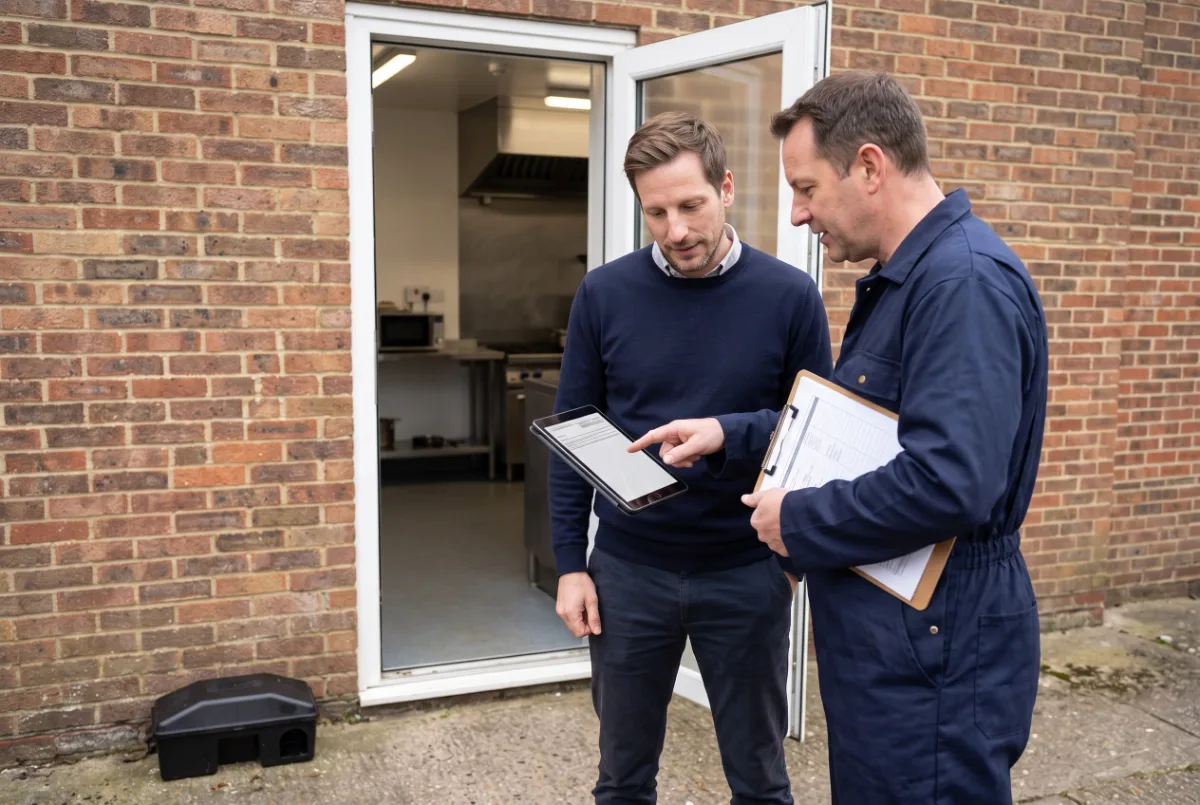
If every contract lives in your head, it's a job. Here's how it becomes a business.
You went solo to pick your own jobs and hours. Instead, the phone sets the day. Emergency call-outs from Hastings to Uckfield land on top of contract visits, and the reports, follow-ups and invoices wait for the evening.
If flu kept you in bed for a week, would your commercial customers still get their visits and paperwork? If not, you've built a job, not a business. I know, because I ran my own firm on 60 to 70 hours a week for years.
Stepping back and putting it on systems changed that, and the firm is now four to five times the size it was when I started. Your contracts and call-outs can run on the same system: see where the time goes, put the repeat work on systems, and spend the hours you win back on the business. I'll help you write your methods down too, so a second technician could follow them. I explain the bigger idea on the page for trades and self-employed people.
What should pest control software do for a small pest control business?
It should handle two kinds of work at once: emergency call-outs that need a fast reply, and contract customers who need visits on a fixed schedule. It should record what you found and used at each visit, send the report from site, book follow-ups automatically, and invoice contracts on time.
| Job | How it often works now | Set up properly |
|---|---|---|
| Enquiries and call-outs | Missed calls while you're in a loft, returned at night. | A text back asking for the pest, the address and a photo. |
| Quotes and contracts | Priced case by case, contracts on paper. | A contract template with scope and visit frequency, signed online. |
| Scheduling | Contract visits kept in your head or a spreadsheet. | A year of contract visits created in one go, with call-outs fitted around them. |
| Visit reports | Handwritten, typed up later, emailed when you remember. | Filled in on your phone at each bait point, with photos, sent before you leave. |
| Follow-ups | Remembered, mostly. | Booked when the treatment is logged, with a reminder to the customer. |
| Invoices and chasing | Contract bills done in a batch when there's time. | Contract invoices raised on schedule, call-outs paid on the day. |
| Reviews and repeat work | Hoping householders remember your name next summer. | A review request after the final visit, and a spring reminder to past customers who agreed to it. |
What rules apply to rodenticides, protected species and food business reports?
Professional users of anticoagulant rodenticides must follow a UK rodenticide stewardship regime, and buyers now need recent proof of competence. COSHH covers the hazardous products you carry. Wild birds, active nests and bats are protected by law. Food businesses are inspected on pest control, so your visit reports matter to them.
Rodenticides and COSHH
HSE says professional use of anticoagulant rodenticides must follow one of the UK rodenticide stewardship regimes, and products can carry restrictions such as no permanent baiting. Under the CRRU UK regime, from 1 January 2026 buyers must show a CRRU-approved training certificate from the past 5 years, or membership of a recognised CPD scheme. HSE also confirms COSHH covers the self-employed when they bring hazardous substances onto someone else's premises.
Protected species
The Wildlife and Countryside Act 1981 makes it an offence to intentionally kill, injure or take a wild bird, or damage a nest in use or being built, unless an exception or licence applies. Natural England's general licence GL41 allows control of some species, such as feral pigeons, for public health or safety, and the current one runs to 31 December 2026. All bat species, their breeding sites and resting places are fully protected, and GOV.UK directs people with a roost who are considering pest control to the National Bat Helpline.
Reports for food businesses
The Food Standards Agency says hygiene inspections check the physical condition of the business, including pest control. Its Safer food, better business pack tells caterers to record their pest contractor's visits and action points, and when they completed them. A clear report sent on the day makes that easy for them.
- Your certificate and CPD dates stored, with a reminder well before they lapse.
- A January reminder to read the new general licences, since GL41 is issued for a calendar year.
- A “protected species found” option on the job sheet that pauses the job while you check.
Please note: this is general information from official sources, not legal advice. For your own situation, speak to your trade association, Natural England, your accountant or a solicitor.
Tell me about a wasp-season week, and I'll show you what could run while you're up a ladder.
Book a free 30-minute callWhat I'd set up first for a pest controller
I'd start where missed calls and missed paperwork cost you most.
Catch every call-out
A missed call gets an instant text asking what the pest is, where, and for a photo. It works like an AI receptionist for missed calls.
Contracts on a timetable
Each commercial contract's visits created for the year, with reminders to you and the customer.
Reports from site
One report template on your phone, sent before you leave, with actions clearly listed.
Follow-ups and invoices that trigger themselves
Logging a treatment books the follow-up. Completing a contract visit raises the invoice.
How do I choose pest control software?
Pick software that handles reactive and contract work together. Check it can build your own report forms with bait points and photos, schedule recurring contract visits, book follow-ups from a treatment, work on a phone in a cellar, send invoices to your accounting software, and export everything if you leave.
- Custom report forms that record bait points, activity and products used.
- Works offline in lofts and plant rooms, then syncs.
- Talks to your accounting software. For sole traders, Making Tax Digital for Income Tax arrived on 6 April 2026 above £50,000 of qualifying income, and the line moves to £30,000 in April 2027 and £20,000 in April 2028. Speak to your accountant about your own case.
- Lets you take your contracts and report history with you if you leave.
As a starting point, and not as recommendations: Klipboard, Joblogic and Powered Now each describe pest control software for UK businesses on their own sites. I have no commercial link with any software supplier.
Why a law firm Managing Partner?
Law firms live on records: who did what, when, and what was advised. The hand-offs I built for my own firm need an approval at each stage, so every step leaves a trail. A pest control contract needs the same: a visit record a customer can show an inspector.
I've spent 20 years in BNI, among local, owner-run businesses like yours. This consultancy has only just started, so I can't show you pest control clients yet. There's more about my background here.
Other trades I help
 Plumbing
Plumbers
Call-outs answered, quotes built from your price list, parts matched to jobs and notifications tracked, so the van isn't your evening office.
For plumbers Electrical
Electricians
Certificates written up on site, EICR recalls sent to landlords, remedials quoted and invoices chased, so testing days don't become writing-up nights.
For electricians Building
Builders
Quotes, variations, subbies and the monthly CIS return, set up so the office side of a building firm stops eating your evenings.
For builders Gas and heating
Gas and heating engineers
Every landlord check and boiler service on one due-date list, records sent from site, and boiler quotes followed up, so winter weekends stay yours.
For gas and heating engineers Locksmithing
Locksmiths
Lockouts caught while you're mid-job, key and job records kept straight, and the invoice sent before you've left the doorstep.
For locksmiths Gardening
Landscape gardeners
For gardeners and landscapers juggling a maintenance round, bigger landscaping quotes and green waste records through a long summer of late nights.
For landscape gardenersQuestions from pest controllers
Can software schedule follow-up visits automatically?
Yes, many job management systems can. You set the rule, such as a revisit a set number of days after a rodent treatment, and logging the treatment books it. You still decide on site whether it's needed.
What should a visit report for a food business include?
Usually what you inspected and found, what you used and where, photos, and clear actions with who should do them. The FSA asks caterers to record contractor visits and action points, so that helps them.
Do I need a certificate to buy professional rodenticides?
Under the CRRU UK stewardship regime, yes. From 1 January 2026, buyers show a CRRU-approved certificate from the past 5 years, or membership of a recognised CPD scheme, at the point of sale.
Can one system handle domestic call-outs and commercial contracts?
Usually, yes. Many field service systems hold one-off jobs and recurring contracts in the same diary. What matters is your set-up: which slots stay free for emergencies, and how far ahead contract visits are booked.
Let's get your evenings back, wasp season included
A free 30-minute call. No jargon and no hard sell. Describe your contracts and call-outs, and I'll tell you straight what I'd automate first.