
“Cleaning all day is fine. It's the rota, the swaps and the invoices at night that finish me off.”
Cleaning business software, built around your regulars. Evenings back to you.
Your weekly and fortnightly customers booked, reminded and invoiced without you, and a cleaning business that keeps going while you're on holiday.
I'm Daniel Andrews. I run a busy law firm in East Sussex, where the admin now runs on systems rather than on my evenings. If you clean homes or offices, I'll help you hand yours to a system and grow a full diary into a proper business.
A typical evening, after a day of cleans
- 7pmRebuilding next week's rotaTwo regulars away, a deep clean added, and your helper can't do Tuesday
- 8pmTexting about the changesFive customers to tell, one still to reply
- 9pmKeys and alarm codesWhich keys are on the hook, and whose code changed
- 10pmInvoices for the fortnightly homesTyped one by one, then two awkward reminders
- 11pmBed, with a cancellation for 8amAnd a request to squeeze in an end-of-tenancy clean
Other people's homes spotless, your own evenings buried in admin
What cleaners say once the diary fills.
“When a regular cancels on the morning, the whole day gets rebuilt by text.”
“My kids get the tired version of me, because Sunday night is rota night.”
“I clean for someone for weeks before I notice they haven't paid.”
“There's a drawer of labelled keys and a list of alarm codes in my phone notes. That can't be right.”
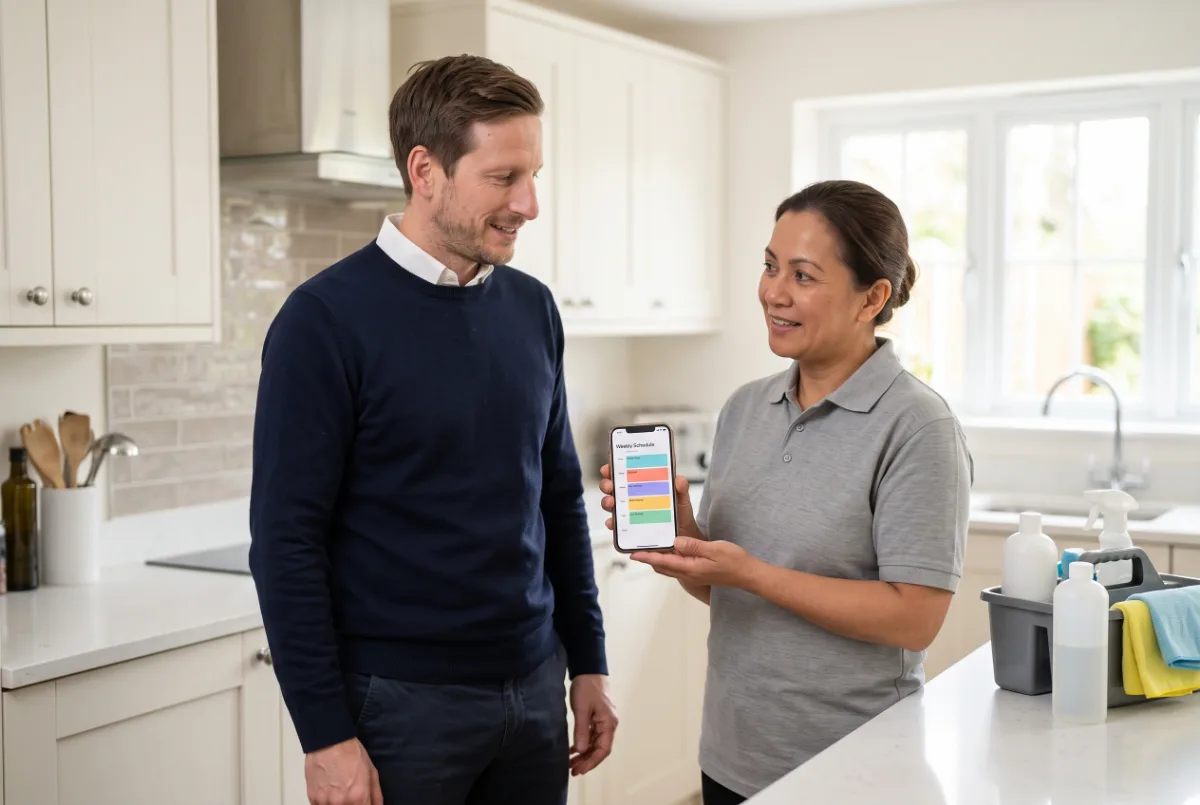
A full diary of regulars is still a job until the admin runs without you
You went self-employed to fit work around the school run and choose who you clean for, whether in Eastbourne, Lewes or Seaford. Then the diary filled. Now your evenings go on the rota and the invoices, and every holiday means ringing round for cover. If the money only comes in when you turn up with the caddy, you've built a job, not a business.
I've been in that trap myself. For years I worked 60 to 70 hours a week, often until 2am. Putting my firm on systems changed that, and it's now four to five times the size it was when I started. I'm a dad of two, so I know what a free Sunday evening is worth.
The way out is a system: see where the time goes, put the repeat work on systems, and spend the hours you win back on the business. For a cleaner, that means bookings, reminders and invoices that run themselves, each home's routine written down, and your numbers in front of you. Then a helper or a week away stops being a crisis. I explain the idea on my page for trades and the self-employed.
What should cleaning business software do for a small cleaning company?
It should keep your regulars on a repeating weekly or fortnightly schedule and move them cleanly when someone cancels or goes on holiday. It should send reminders, hold key and access notes securely, show who cleaned where, and raise each invoice after the visit. Cleaning company software for teams should also record hours for payroll.
| Job | How it often works now | Set up properly |
|---|---|---|
| Enquiries | Messages and missed calls, answered at night. | A short form asks size, frequency and day, then drafts your reply. |
| Quotes | Priced at the kitchen table after a walk round. | Your own price sheet, so the quote goes out that afternoon. |
| Booking and diary | A paper diary and a head full of who's fortnightly. | Repeating visits on one calendar, with customers told about changes automatically. |
| Keys, codes and access notes | Keys labelled with addresses, codes in phone notes. | Numbered keys, codes in a locked app, access removed when a helper leaves. |
| Cover and helpers | Ringing round when someone is ill. | A job sheet for every home, and hours recorded for payroll. |
| Invoices and chasing | Written on Sunday, chased when you remember. | Raised when the clean is done, and chased until the money lands. |
| Reviews and repeat work | Hoping customers mention you to friends. | A review request after the third clean, and spring offers to past customers who opted in. |
What rules cover cleaning products, customers' keys and taking on staff?
COSHH covers hazardous cleaning products, and HSE says it applies to self-employed people who take them into other people's premises. UK GDPR requires personal information such as customers' addresses to be kept secure, which matters most beside keys and alarm codes. Employing anyone brings the National Minimum Wage rules.
Cleaning products and COSHH
HSE's COSHH guidance for the self-employed says that with no employees, every part applies except monitoring and health surveillance, if you take hazardous substances to other people's premises. A product counts as hazardous if its packaging carries any hazard symbol. Suppliers must provide a safety data sheet for dangerous products, but HSE says the sheet is not a risk assessment.
Keys, alarm codes and UK GDPR
The ICO has a guide to data security that covers physical security, such as locks and mobile devices, as well as computers. Lost or stolen devices holding personal data are one kind of personal data breach, and notifiable breaches must be reported within 72 hours of becoming aware.
Taking on your first helper
The National Living Wage is £12.71 an hour for workers aged 21 and over from April 2026. GOV.UK says travelling from one work assignment to another counts as working time for minimum wage purposes. Records proving you pay the National Minimum Wage must generally be kept for at least 6 years. GOV.UK's guide to employing someone covers PAYE, pensions and Employers' Liability insurance.
None of that has to live in your head. A simple system can carry it:
- Safety data sheets and your COSHH assessment on your phone.
- A numbered key register, and alarm codes in a locked app.
- Arrival and leaving times at each house, so travel between cleans shows in a helper's hours.
- A prompt to return the key and delete the code when a customer leaves.
Please note: this is general information from official sources, not legal, employment or tax advice. For your own situation, speak to your accountant, Acas or a solicitor.
Tell me how your week of regulars runs, and I'll show you which jobs a system could take off you.
Book a free 30-minute callWhat I'd set up first for a cleaner
These four usually free the most evenings, in the order they tend to bite.
Regulars on repeat
Every weekly and fortnightly customer on a repeating booking. A holiday is moved once, and everyone affected gets a text.
Keys and codes locked down
A numbered key register and codes in a secure app, with access you can switch off in one go.
An invoice after every clean
Marking the visit done raises the invoice, then unpaid invoices get chased automatically.
A cover plan
A job sheet for each home: where the vacuum lives, which products, what not to touch. Then a helper can cover your week.
How do I choose cleaning business software?
Start with how your week runs. Look for repeating weekly and fortnightly visits, easy rescheduling, secure notes for keys and alarm codes, a simple phone app for you and any helpers, and invoices that flow into your accounting software. Trial it with a few real customers first.
- Handles regular visits alongside one-off deep cleans and end-of-tenancy work.
- Works on a phone in a customer's hallway, even with poor signal.
- Connects to your accounting software. HMRC's Making Tax Digital for Income Tax began on 6 April 2026 for any sole trader whose qualifying income topped £50,000, and reaches those above £30,000 from April 2027 and above £20,000 from April 2028. Ask your accountant how it affects you.
- Exports your customers and visit history if you leave.
Examples, not recommendations: CleanManager, Powered Now and Joblogic each describe cleaning software for UK firms on their own sites. I don't earn anything from them, or from any software company.
Trust is my day job too
A cleaner holding customers' keys is trusted with their homes. I'm a practising solicitor, so keeping confidences, getting the facts straight and getting the detail right are habits. This consultancy doesn't give legal advice and isn't regulated by the SRA, but those habits come with me.
I'm also Managing Partner of a two-office law firm in East Sussex, with around 30 people. Its live reporting dashboard, and the approval steps colleagues use to hand work on, are systems I built there first.
I've sat in BNI meetings with local business owners for 20 years. The consultancy itself is new, and no cleaning business has worked with me yet. Read more about me and what I've built.
Other trades I help
 Plumbing
Plumbers
Call-outs answered, quotes built from your price list, parts matched to jobs and notifications tracked, so the van isn't your evening office.
For plumbers Electrical
Electricians
Certificates written up on site, EICR recalls sent to landlords, remedials quoted and invoices chased, so testing days don't become writing-up nights.
For electricians Building
Builders
Quotes, variations, subbies and the monthly CIS return, set up so the office side of a building firm stops eating your evenings.
For builders Gas and heating
Gas and heating engineers
Every landlord check and boiler service on one due-date list, records sent from site, and boiler quotes followed up, so winter weekends stay yours.
For gas and heating engineers Locksmithing
Locksmiths
Lockouts caught while you're mid-job, key and job records kept straight, and the invoice sent before you've left the doorstep.
For locksmiths Gardening
Landscape gardeners
For gardeners and landscapers juggling a maintenance round, bigger landscaping quotes and green waste records through a long summer of late nights.
For landscape gardenersQuestions from cleaners
Is cleaning business software worth it if I work on my own?
Often, once you have more regulars than you can hold in your head. If a paper diary still works, keep it. If admin takes more than an evening a week, try a system with a few customers.
Where should I keep customers' keys and alarm codes?
Tag keys with a number, never the address, and lock them away. Keep codes in a secure app, not phone notes, and remove a helper's access when they leave. General information only, not legal advice.
Does COSHH apply to ordinary cleaning products?
HSE says a product is hazardous if its packaging carries any hazard symbol, and COSHH applies to self-employed cleaners who take such products into customers' homes. Check your labels and keep the safety data sheets.
Can software handle cancellations and holiday cover?
Cleaning company software usually lets you move visits, and many systems can text the customer for you. You decide the rule: how much notice, whether late cancellations are charged, and who covers. Once it's written down, the system follows it.
Let's take Sunday night back from the rota
A free 30-minute call. No jargon and no hard sell. Tell me how your regulars, keys and invoices work, and I'll say plainly what I'd set up first.